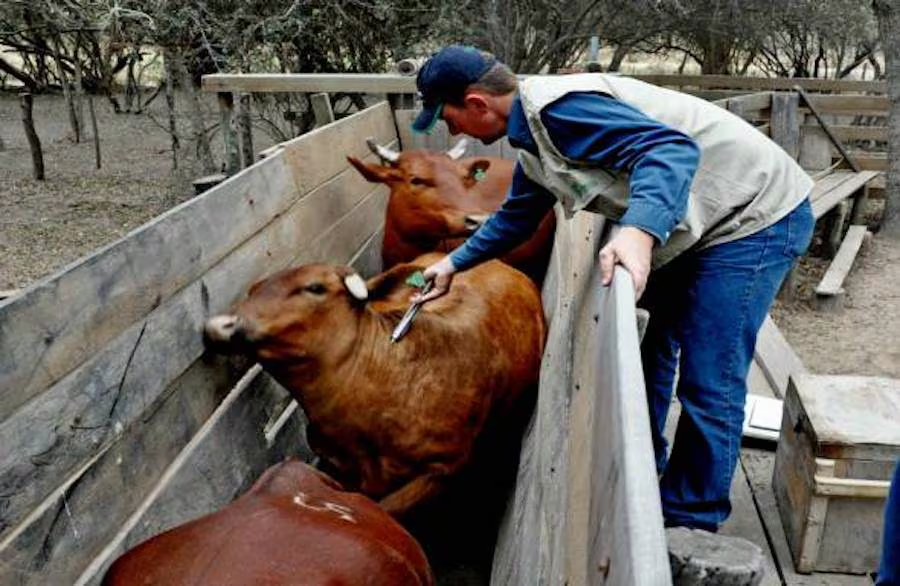


How Paraguay’s premium beef is reshaping international trade and offering consumers affordable, high-quality options.
The Global Appetite for Paraguayan Beef
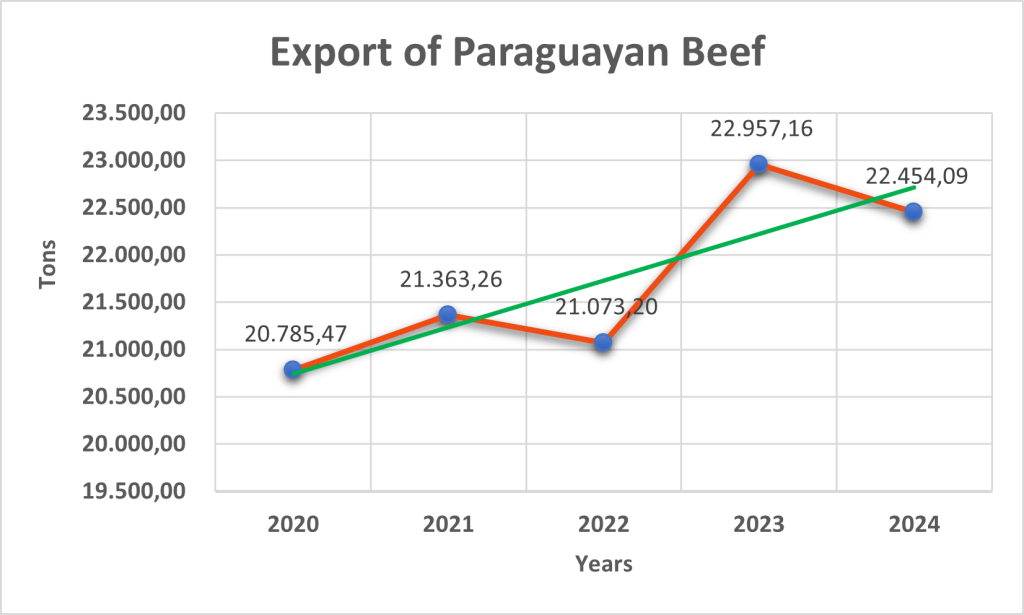
In recent years, Paraguay has emerged as a key player in the global beef trade, steadily increasing its export volumes while maintaining competitive prices. Between 2020 and 2024, the country’s beef exports have shown consistent growth, with tonnage rising by 8.1%. This trend reflects not only the efficiency of Paraguay’s beef industry but also its growing importance to international markets.
For importing nations, Paraguayan beef offers a compelling value proposition: high-quality meat at accessible prices. As global inflation strains household budgets, especially in major beef-consuming countries, Paraguay’s exports provide consumers with a cost-effective alternative to pricier domestic or regional options.
Steady Growth Amid Price Fluctuations
Despite occasional price volatility in global markets, Paraguay’s beef industry has proven resilient. While export volumes increased from 20,785 tons in 2020 to 22,957 tons in 2023, the corresponding revenue rose from $96.9 million to over $106 million in 2024. This growth underscores the country’s ability to adapt to shifting demand and sustain its export strategy.
Notably, the rise in Paraguayan beef exports aligns with global trends favoring leaner, grass-fed options, which Paraguay excels at producing. This makes it an attractive choice for consumers in countries like the United States, where health-conscious eating and sustainable sourcing have gained traction.
Why Importing Paraguayan Beef Benefits Consumers
For consumers in importing countries, Paraguayan beef delivers several advantages:
- Affordable Quality: Paraguay’s competitive pricing allows retailers to offer premium beef cuts at lower costs, making high-quality options more accessible.
- Sustainability: Grass-fed beef from Paraguay has a smaller carbon footprint compared to grain-fed alternatives, appealing to environmentally conscious buyers.
- Cultural Fit: Paraguay’s beef exports are increasingly tailored to meet the culinary preferences of global markets, from steaks in North America to barbecue cuts in Asia.
- Stable Supply: The consistency in export volumes ensures reliable availability for global distributors, even during supply chain disruptions.
Paraguay’s Regional Standing and Challenges
Compared to regional giants like Brazil and Argentina, Paraguay operates on a smaller scale but punches above its weight in quality. While Brazil leads in sheer volume, Paraguay has cultivated a reputation for premium, sustainable beef. This focus on quality rather than quantity has allowed the country to carve out a niche in competitive markets.
However, challenges remain. Paraguay’s reliance on traditional export markets could limit its growth potential. Diversifying destinations, particularly in Asia, would shield the industry from economic downturns in current markets and open new opportunities.
The Bigger Picture: Beef Exports and Paraguay’s Economy
Beef exports play a vital role in Paraguay’s economy, contributing significantly to its GDP and trade balance. In 2024, beef exports accounted for approximately 0.26% of Paraguay’s GDP, highlighting the industry’s importance not just to rural producers but to the country’s broader economic health.
For developing nations like Paraguay, sectors like beef production offer a pathway to sustained economic growth and international integration. As the global demand for quality meat continues to grow, the Paraguayan beef industry is well-positioned to capitalize on its strengths.
What the Future Holds
The future of Paraguayan beef exports looks promising but depends on strategic investments and policy decisions. By diversifying export markets and enhancing sustainability, Paraguay could secure its place as a global leader in premium beef.
For consumers worldwide, this means continued access to affordable, high-quality beef that aligns with modern values of health and sustainability. As global trade continues to evolve, Paraguay’s beef industry serves as a model for how small nations can make a big impact.